Choosing the right managed service provider (MSP) shapes how reliable, secure, and scalable your IT environment will be for years to come. The best providers reduce operational pressure, strengthen security, and free your team to focus on running the business rather than managing tickets.
Not all MSPs deliver the same level of service, and choosing the wrong one can mean ongoing issues, increased risk, and unnecessary cost. Five factors are worth weighing carefully before you commit: scalability, response times, security capability, strategic alignment, and a proven track record.
At a glance: The five factors to evaluate
Factor |
What good looks like |
Warning signs |
| Scalability | Flexible service models that grow with the business | One-size-fits-all contracts |
| Response times | Clearly tiered SLAs with defined resolution times | Vague response commitments |
| Security | Integrated, proactive protection built into the service | Security sold as a separate add-on |
| Strategic alignment | Roadmaps, budgeting input, and genuine Microsoft/AI capability | Licensing without enablement or planning |
| Track record | High customer satisfaction and referenceable case studies | No measurable outcomes to point to |
What is a managed service provider?
A managed service provider (MSP) is a third-party partner that manages your IT systems, infrastructure, and end-user support on an ongoing basis. MSPs provide proactive monitoring, maintenance, and security to reduce downtime and improve performance.
MSPs are typically used by:
-
-
Small to mid-sized organisations without large internal IT teams
-
Enterprises needing co-managed IT support
-
Businesses undergoing cloud or digital transformation
-

How to choose the right MSP
1. Scalability that matches your growth
Scalability comes down to anticipating what your business will need next, then building for it ahead of time. The right MSP adapts to your evolving goals, keeping your IT environment ready to support innovation as your business grows.
As organisations adopt digital transformation and cloud technologies, demand for managed services continues to grow. In fact, 91% of organisations are adopting a digital-first strategy to enhance cloud security, manage risks, and maintain control. Your MSP must scale alongside your business, preventing bottlenecks and maintaining operational efficiency as you grow. This flexibility is essential for sustaining productivity and avoiding disruption during periods of expansion.
These trends highlight the increasing reliance on managed IT services and reinforce why choosing the right provider is critical.
What to look for:
-
-
Flexible service models such as fully managed or co-managed IT
-
Ability to scale users, infrastructure, and cloud environments
-
Support for future technologies such as AI and automation
-
-
-
How do you decide which users need advanced capability versus standard access?
-
What's changed about how you support businesses our size in the past two years?
-
What would our environment look like if we doubled in headcount?
-
Key factors driving the demand for managed IT services
-png.png?width=900&height=463&name=IT%20Trends%20Infographic-selection%20(2)-png.png)
Figure 1: Key factors driving the demand for managed IT services: Digital transformation, security concerns, and skills shortages are some of the top drivers pushing businesses to invest in MSPs.
2. Quick response times that minimise downtime
Timely support is critical, since downtime translates directly into lost revenue, missed deadlines, and frustrated staff. Look for MSPs that provide 24/7 support, ensuring your business is covered at all times, including outside standard operating hours. A strong Service Level Agreement (SLA) should clearly define response and resolution times, particularly for critical issues.
The best MSPs prioritise incidents based on severity and have clearly defined SLAs. Critical issues should receive immediate attention, while lower-priority incidents are resolved within agreed timeframes. An onshore service desk can further improve response times by combining proximity with a strong understanding of the local business environment. This enables faster, more relevant support and helps reduce downtime.
Best-practice SLAs typically include:
-
-
Critical (P1): Immediate response
-
High (P2): Within 1 hour
-
Medium (P3): Same-day response
-
Questions to ask:
-
-
How often do you proactively review our environment, beyond just responding to tickets?
-
Can you show examples of proactive recommendations you've made for similar businesses?
-
How do you identify problems before users notice them?
-
Not sure how support tiers actually work behind the scenes? Our guide to what level 1, 2, and 3 IT support means breaks down how issues get escalated and resolved.
3. Proven security expertise to protect your business
As cyber threats become more sophisticated, security must be a core capability for any MSP. It is no longer enough to provide reactive support. Effective providers deliver integrated security services that protect your environment on an ongoing basis.
Leading MSPs offer capabilities such as managed detection and response (MDR), vulnerability management, and continuous monitoring through a Security Operations Centre. Given that 96% of IT employers are experiencing a skills shortage, particularly in cyber security, partnering with an MSP that provides comprehensive coverage can help address critical gaps.
A proactive approach to security includes threat detection, vulnerability assessments, and continuous monitoring. These measures help reduce risk, maintain business continuity, and protect your organisation from evolving cyber threats. For more on how this works in practice, see how managed IT services improve cyber security.
Questions to ask:
-
-
What certifications and accreditations can you show us?
-
Can you share documented incident response processes, with specific examples?
-
What measurable security outcomes have you delivered for similar clients?
-
4. Long-term strategic IT planning for sustainable growth
A strong MSP does more than maintain your systems. It plays a key role in shaping your long-term IT strategy.
Providers that offer ongoing strategic planning ensure your technology roadmap aligns with business objectives. This includes supporting decisions around cloud adoption, automation, and emerging technologies such as AI strategy and planning, and IoT.
With 87% of enterprises adopting multi-cloud strategies, managing complex environments has become essential for maintaining agility and supporting digital transformation. MSPs play a critical role in helping
organisations manage this complexity while continuing to innovate.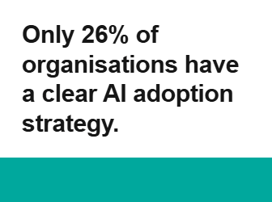
Strategic alignment increasingly means one thing in particular: can your MSP help you adopt AI safely and get genuine value from it, well beyond simply switching it on. Microsoft 365 Copilot has moved quickly from pilot projects to boardroom conversations, but enabling the technology is only a small part of the journey. Only 26% of organisations report having a formal AI strategy, while most employees are already experimenting with AI tools at work regardless, creating governance, security, and compliance risks many businesses haven't yet addressed.
A capable MSP should be able to explain which teams stand to benefit most from AI tools and why, what governance and security requirements need to be in place before rollout, how they'll assess your Microsoft 365 readiness, what user training and adoption plans look like, and how they'll measure whether AI is delivering value over time. We've seen the same pattern across many Microsoft Copilot deployments: organisations that focus purely on switching on the technology rarely achieve consistent results. The businesses seeing genuine productivity gains tend to start with clear use cases, a structured rollout, proper governance, and practical user enablement, well before they think about scaling it further.
The best MSPs act as strategic partners, ensuring every IT investment (including AI) supports long-term growth and business outcomes.
Questions to ask:
-
-
How would you assess our Microsoft 365 readiness before an AI rollout?
-
Which teams do you think should adopt AI first, and how did you land on that?
-
How often will we sit down to review our technology roadmap together?
-
5. A strong track record and high customer satisfaction
A proven track record is a strong indicator of reliability. Look for MSPs with consistently high customer satisfaction scores, positive client feedback, and a history of delivering measurable outcomes. Independent

recognition, such as industry awards, is also worth checking. It signals the provider's performance holds up against outside scrutiny, beyond their own marketing claims.
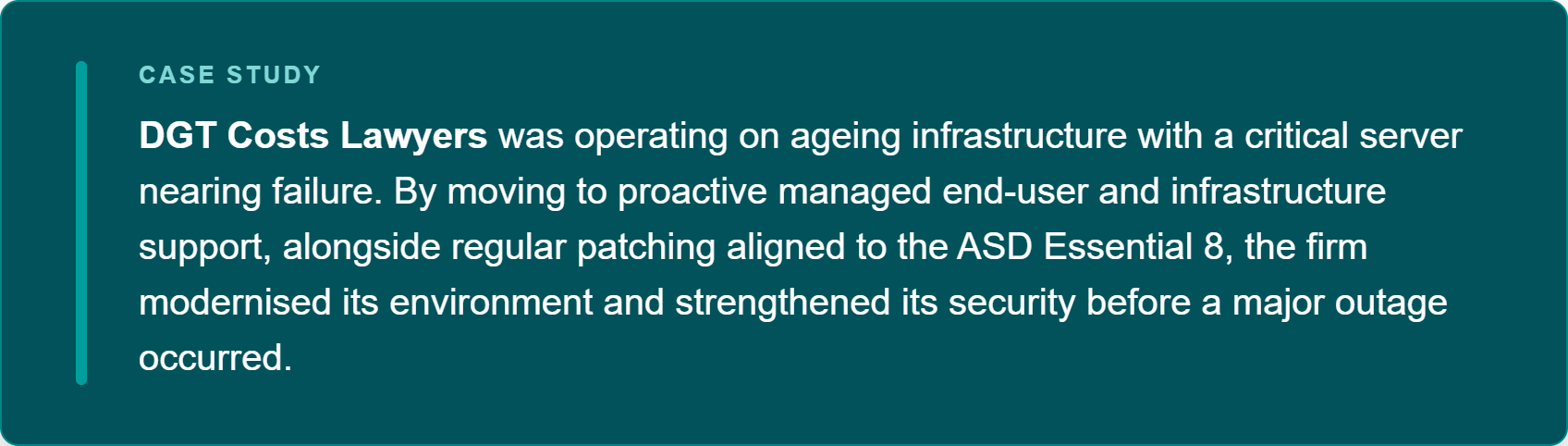
High-performing providers demonstrate their value through long-term client relationships, strong service delivery, and the ability to meet expectations over time. This reduces risk and provides greater confidence as your business grows. Browsing a provider's case studies is one of the fastest ways to see whether their claims hold up.
Questions to ask:
-
-
What's your current customer satisfaction score, and how does it compare to industry benchmarks?
-
Can you share a case study from a business similar to ours?
-
How long do your clients typically stay with you, and why?
-
What to look for in an MSP in Australia
When evaluating managed service providers in Australia, consider the following:
-
-
Local support and onshore delivery. Faster response times and a better understanding of local business and regulatory environments
-
Alignment to Australian compliance frameworks. Experience with standards such as Essential Eight and ISO 27001, particularly for regulated industries
-
Experience supporting your industry. Proven delivery in sectors such as financial services, legal, healthcare, or government
-
Integrated IT and cyber security capabilities. The ability to deliver managed IT services and cyber security as one combined offering
-
Clear SLAs and measurable performance. Defined response times, escalation processes, and reporting to ensure accountability
-
This ensures your MSP can support both day-to-day operations and long-term risk management within the Australian regulatory landscape.
MSP vs internal IT vs co-managed IT
Businesses typically choose between three models:
| Model | Best for | Considerations |
| Managed service provider (MSP) | Organisations without internal IT teams | Less direct control, but fully outsourced management |
| Co-managed IT | Businesses with internal IT needing additional support | Shared responsibility between internal and external teams |
| Internal IT | Large organisations with full in-house capability | Higher cost and resourcing requirements |
Your MSP evaluation checklist
Before signing or renewing an agreement, you should be able to answer yes to each of these:
-
-
Does the provider scale support and licensing as the business grows?
-
Do they offer clear, tiered SLAs with defined response times?
-
Is cyber security built into the core service by default?
-
Can they demonstrate real capability with Microsoft 365 and AI adoption, beyond basic licensing?
-
Do they contribute to long-term strategy, budgeting, and roadmaps?
-
Can they show a proven track record and measurable customer satisfaction?
-
If you're answering no to more than one of these, it's worth a closer look at what's actually in your agreement.
Frequently asked questions
Choose wisely for success
Choosing the right managed service provider is a critical decision that will influence your organisation's performance, security, and long-term growth.
Partnering with an MSP that delivers scalability, strong support, and strategic guidance is essential for maintaining resilience in a rapidly changing technology landscape.
The Missing Link provides managed IT and cyber security services across Australia, helping organisations build secure, scalable, and resilient IT environments.
For a more detailed guide, download Outsourced IT Support: Is it right for your business? to explore how to evaluate MSPs, avoid common pitfalls, and select a provider that aligns with your long-term goals.
Already chosen a provider and want to make sure the relationship gets off to a strong start? Read what comes next after choosing a managed IT service provider. And if you're reassessing an existing agreement rather than starting fresh, here's when to renegotiate your managed IT agreement and what to measure.