Welcome to the latest edition of The Neural Link!
In this edition, we explore how the AI model race is accelerating, alongside a clear shift towards real-world deployment. New releases from OpenAI, Google, and Anthropic highlight stronger reasoning, multimodal capabilities, and the rise of enterprise-ready AI agents. At the same time, partnerships, regulation, and ecosystem moves are reshaping how organisations adopt and scale AI.
Here are some of the latest developments shaping the AI landscape.
Latest AI releases
This month saw major AI labs push beyond model launches into practical deployment. Updates focused on stronger frontier models, enterprise agents, multimodal generation, AI speech, and tools that make AI easier to embed into everyday work.
|
Company |
Model / Launch |
What’s new |
|
OpenAI |
GPT 5.5 |
A stronger cross-tool model for coding, research, documents, and productivity workflows. |
|
Anthropic |
Claud Opus 4.7 |
Improves complex software engineering, long-running tasks, and instruction following without changing pricing. |
|
|
Gemini 3.1 (Flash TTS+ Pro) |
Expands into expressive AI speech and stronger reasoning, powering multimodal and enterprise use cases. |
|
DeepSeek |
V4 model preview |
Introduces lower-cost open-weight models that narrow the gap with frontier AI on reasoning and coding. |
|
OpenAI |
AI agents expansion (Codex + Workspace agents) |
Enables multi-step task execution across tools, bringing automation into ChatGPT and enterprise workflows. |
|
OpenAI |
ChatGPT Images 2.0 |
Significantly improves text rendering, layout accuracy, and visual reasoning in generated images. |

OpenAI resets the model race with GPT-5.5
OpenAI has launched GPT-5.5, positioning it as a stronger, cross-functional model designed for coding, research, and productivity workflows. The update builds on previous iterations with improved performance across benchmarks, particularly in agent-based computer tasks and technical problem-solving. Alongside the model, OpenAI is expanding access through integrations with tools like AWS Bedrock and Codex, signalling a clear push towards enterprise deployment and real-world usability.
Why it matters:
The release highlights how quickly the model race is accelerating. Competition is no longer just about raw performance. It is about how well models integrate into everyday workflows. For businesses, this signals a shift from experimentation to operational AI, where productivity gains depend on how effectively these tools are embedded into systems and processes.
AI models are now finding software vulnerabilities at scale
Anthropic’s Claude Mythos preview has demonstrated the ability to identify hundreds of real-world software vulnerabilities, including in widely used systems like Firefox. The model is positioned as a high-capability tool for security research, capable of analysing complex codebases and uncovering issues that traditionally require skilled human experts. While this shows clear potential to strengthen defensive security practices, it also highlights the dual-use nature of advanced AI systems if access is not tightly controlled.
Why it matters:
This signals a shift in cybersecurity from human-led testing to AI-augmented discovery at scale. For businesses, it raises both opportunity and risk. AI can accelerate vulnerability detection and improve resilience, but it also lowers the barrier for sophisticated cyber threats. As capability increases, governance, access controls, and monitoring will become critical to safely deploying these systems in enterprise environments.
DeepSeek challenges frontier models on cost and performance.png?width=290&height=290&name=DeepSeek%20(2).png)
DeepSeek has previewed its new V4 models, claiming they narrow the gap with leading frontier AI systems while maintaining significantly lower costs. The models focus on reasoning and coding tasks, with an open-weight approach that gives developers more flexibility compared to closed systems from major providers.
Why it matters:
Cost is becoming a critical battleground in AI adoption. If smaller or open-weight models can deliver comparable performance, businesses gain more control over deployment and spend. This could accelerate innovation, particularly for organisations looking to scale AI without relying entirely on hyperscalers.
Microsoft reshapes its AI ecosystem with new partnerships
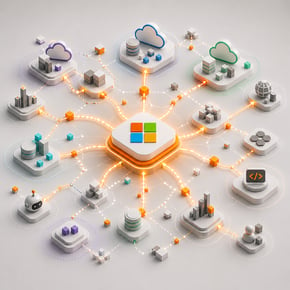
Microsoft is expanding its AI ecosystem through strategic partnerships and platform updates, positioning itself as a central hub for enterprise AI. Changes to its relationship with OpenAI, alongside broader integrations across cloud and enterprise tools, reflect a move towards a more open and scalable AI environment.
Why it matters:
The enterprise AI landscape is shifting from isolated tools to interconnected ecosystems. Organisations do not just need powerful models. They need platforms that integrate securely across their data, workflows, and infrastructure. Microsoft’s strategy signals where long-term value will be created, in orchestration, not just innovation.
Regulators are moving to enforce AI risk controls
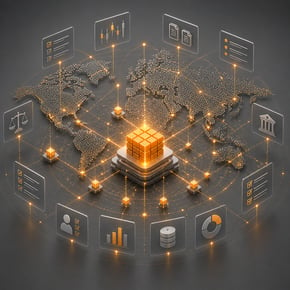 Australia’s financial regulator has warned that AI adoption is accelerating faster than risk management, with firms increasingly relying on third-party tools they do not fully understand. The guidance highlights gaps in oversight, governance frameworks, and operational resilience as AI becomes embedded in core business processes. It signals a shift from high-level principles to more targeted expectations around how organisations manage AI risk in practice.
Why it matters:
This reflects a broader shift in AI governance from guidance to enforcement. For businesses, it raises both urgency and accountability. As AI becomes part of critical operations, regulators expect stronger controls around vendor risk, transparency, and monitoring. Organisations that fail to align governance with deployment may face increased scrutiny as oversight tightens.
OpenAI expands AI agents beyond chat into real workflows
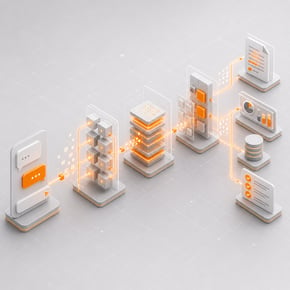 OpenAI is pushing AI agents further into practical use cases with updates to Codex and the introduction of workspace agents. These tools can now handle multi-step tasks, interact with browsers, generate content, and automate workflows across platforms like ChatGPT and Slack.
Why it matters:
AI agents are moving from concept to capability. Instead of assisting with single prompts, they are starting to execute end-to-end tasks. For businesses, this opens the door to real automation, reducing manual effort, speeding up processes, and reshaping how teams work day to day.
Other news in AI
-
Google introduces Gemini 3.1 Flash TTS, expanding expressive, multi-speaker AI voice across 70+ languages
-
Anthropic launches Claude Design, turning prompts into prototypes, slides, and visual assets for non-designers
-
OpenAI releases ChatGPT Images 2.0, significantly improving text rendering and layout accuracy in generated visuals
-
Anthropic and NEC partner to scale AI-native engineering in Japan, embedding Cluade across software development and enterprise workflows.
-
OpenAI made ChatGPT for Clinicians free to verified US clinicians, supported by strong internal safety testing for clinical workflows.
-
Google Cloud Next highlights the rise of the agentic enterprise, with new tools for building and managing AI agents at scale
This month’s stories show how AI is shifting from capability to execution. Stronger models are only part of the picture. The real momentum is in how organisations are deploying AI, integrating it into workflows, and navigating growing regulatory expectations.
We’ll continue tracking the developments that matter.
If you’re thinking about what this means for your organisation, let’s talk. And if you haven’t already, subscribe to The Neural Link for a monthly view of the trends shaping AI and automation, delivered straight to your inbox.